

Posted by Support Team
on March 13, 2025

KEY TAKEAWAYS
- Eczema, also known as atopic dermatitis, is a common skin condition that can appear in babies as early as the first 6 months of life caused by a combination of genetic and environmental factors. In fact, eczema is one of the most common skin conditions in infants, affecting around 1 in 5 children in the UK at some point.
- Knowing what baby eczema looks like is the first step to getting the right care it typically appears as dry, itchy, inflamed patches on the face, scalp, and joints, but can look very different depending on your baby’s skin tone.
- Eczema in babies doesn’t always appear red on darker skin tones it can look different, meaning babies with melanated skin are frequently misdiagnosed. Knowing the signs of eczema in babies on all skin tones is essential.
- A compromised skin barrier is at the root of baby eczema keeping skin consistently moisturised is one of the most effective ways to manage symptoms.
- Common triggers include dry air, harsh soaps, allergens, certain fabrics, and food allergies identifying and avoiding these is key to reducing flare-ups.
- Natural oils like coconut oil, olive oil, and almond oil are excellent for soothing eczema-prone baby skin especially when applied after bathing to lock in moisture. For the face specifically, opt for fragrance-free, lightweight options to avoid further irritation.
- Fragrance-free, hypoallergenic, and natural skincare products are a must for babies with eczema fragrances and artificial colours are common irritants that can worsen symptoms.
- Soft, breathable cotton clothing reduces friction and overheating both of which can trigger eczema flare-ups in babies.
- Breastfeeding supports the immune system and can help reduce inflammation and dietary adjustments like eliminating dairy or eggs may also help in some cases.
- Always consult a healthcare provider before trying new treatments, particularly if your baby’s eczema is severe or persistent.
Eczema, also known as atopic dermatitis, is a common skin condition that affects many babies in their first few months of life. This itchy, inflamed skin can cause discomfort and concern for parents. While eczema is not harmful in the long term, it can be distressing for both babies and their families. Thankfully, there are several natural ways to help manage and minimise eczema flare-ups in babies. Here’s what you need to know.
What Is Eczema in Babies?
Eczema in babies typically appears as red, dry, and itchy patches of skin, often on the face, scalp, arms, and legs. It can occur at any age, but most babies begin to show signs of eczema before the age of 6 months. The exact cause of eczema is not fully understood, but it’s believed to be a combination of genetic and environmental factors. Babies with eczema tend to have a compromised skin barrier, which makes them more vulnerable to irritants, allergens, and bacteria.
Why does eczema happen in babies? Essentially, when the skin barrier doesn’t function as it should, moisture escapes and irritants get in more easily — triggering the immune system to overreact and cause the inflammation you see on the skin.
How Do I Know It’s Eczema? (Signs & Symptoms)
Knowing the signs of eczema in babies can help you spot it early and get the right care. Eczema in babies can appear as a dry, itchy rash and is not always red this depends on skin colour. Babies with darker skin are often misdiagnosed due to doctors not being able to identify eczema on melanated skin.
So what does baby eczema look like? It can vary, but common signs include:
- Dry, scaly skin
- Redness and swelling of the skin (or grey, brown, or purple patches on darker skin tones)
- Small bumps that open and weep when scratched
- Skin that looks wet if it’s very irritated or infected
- Scratch marks and bleeding
Common areas for eczema in babies are the face, outside of the elbows, on the knees, scalp, and arms and legs.
Other symptoms
- Severe itching that can cause disturbed sleep and irritability
- Skin that may become very rough, leathery, and darker in colour if scratched for many weeks to months
Common Triggers of Eczema in Babies
Eczema flare-ups can be triggered by several factors, including:
- Dry air or cold weather: Dry skin is more prone to irritation.
- Harsh soaps and detergents: These can strip the skin of its natural oils.
- Allergens: Dust mites, pet dander, and pollen can irritate the skin.
- Certain fabrics: Wool and synthetic fibres can cause itching and irritation.
- Food allergies: In some cases, food triggers like dairy, eggs, or peanuts can exacerbate eczema.
Natural Ways to Minimise Eczema in Babies
While eczema may not completely go away, there are natural and gentle ways to help soothe and minimise symptoms for your baby. Here are some effective remedies you can try:
1. Moisturise Regularly with Natural Oils
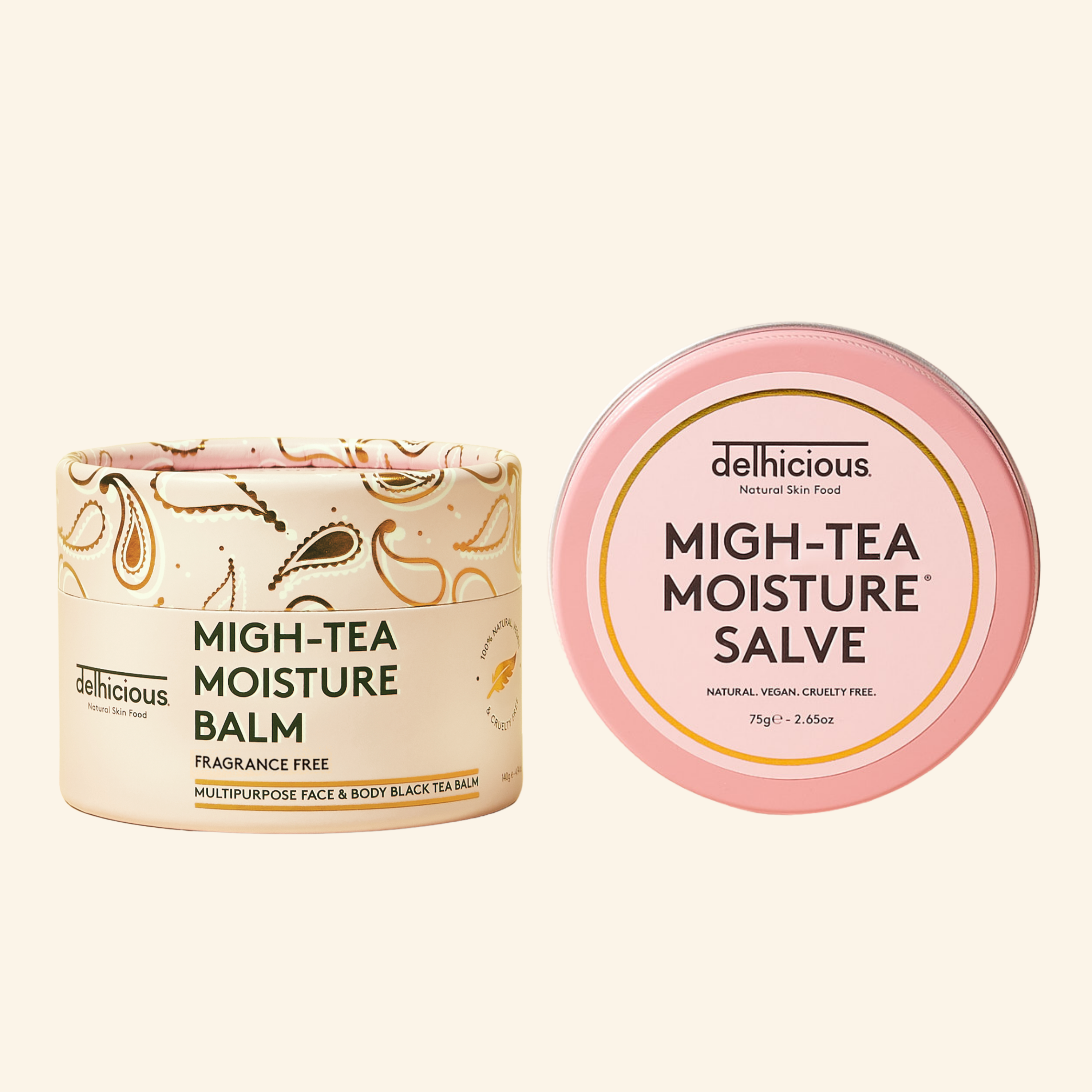
One of the best ways to manage eczema is to keep your baby’s skin well-moisturised. Natural oils such as coconut oil, olive oil, and almond oil are excellent options for soothing dry skin and providing relief from itching. Coconut oil, in particular, has anti-inflammatory and antimicrobial properties, making it a great choice for eczema-prone skin. Apply the oil after bathing to lock in moisture and keep the skin hydrated. The Delhicious Fragrance Free Migh-Tea Moisture Balm is a great natural, yet hydrating option to go for and it contains almond oil.

2. Oatmeal Baths
Oatmeal is known for its soothing properties and can help alleviate itching and irritation associated with eczema. You can use colloidal oatmeal (finely ground oatmeal) in your baby’s bathwater. Simply add a handful of the oatmeal to a lukewarm bath and let your baby soak for 10–15 minutes. The oatmeal will create a protective barrier on the skin and provide relief from inflammation and dryness.
3. Use Gentle, Fragrance-Free Skin Products
When caring for a baby with eczema, it’s essential to choose skin care products that are gentle and free from harsh chemicals. Look for fragrance-free, hypoallergenic, and natural products, such as calendula creams or neem-based oils, which are known for their anti-inflammatory and skin-healing properties. Avoid soaps with added fragrances or artificial colours, as they can irritate sensitive skin.
If you’re wondering what to use for baby eczema on the face, this is especially important — the skin on your baby’s face is particularly delicate, so opt for lightweight, fragrance-free balms that won’t clog pores or cause further irritation.
4. Maintain a Comfortable Temperature and Humidity
Extreme temperatures, whether hot or cold, can trigger eczema flare-ups. Keep your baby’s environment at a comfortable temperature, and consider using a humidifier to prevent dry air, especially in the winter months. Dry air can strip your baby’s skin of moisture, making eczema worse. A humidifier can help maintain the skin’s hydration and soothe irritation.
5. Dress Your Baby in Soft, Breathable Fabrics
The fabric your baby wears can have a significant impact on eczema. Opt for soft, natural fabrics like cotton, which allow the skin to breathe and reduce the likelihood of irritation. Avoid wool, synthetic fabrics, and tight-fitting clothing, as these can exacerbate eczema symptoms. Always dress your baby in loose, comfortable clothing to prevent friction and overheating.
6. Breastfeeding and Diet
Breastfeeding is beneficial for babies with eczema, as breast milk contains antibodies that support the immune system and help reduce inflammation. If you’re breastfeeding, try to maintain a healthy diet and consider eliminating common food allergens (like dairy, eggs, or nuts) to see if that improves your baby’s eczema. If your baby is formula-fed, talk to your paediatrician about trying hypoallergenic formulas that may be gentler on your baby’s skin.
7. Keep Nails Short and Clean
Babies tend to scratch when they feel itchy, which can lead to further skin irritation or infection. Keep your baby’s nails trimmed and smooth to reduce the risk of scratching. You can also consider using scratch mittens to prevent your baby from scratching while sleeping.
Eczema in babies can be challenging, but with proper care and the right natural remedies, it is possible to minimise symptoms and provide relief for your little one. By keeping your baby’s skin hydrated, using gentle skincare products, and avoiding common triggers, you can help soothe eczema flare-ups and promote healthier skin. Always remember to consult with your healthcare provider before trying new treatments, especially if your baby’s condition is severe or persistent.
With patience and the right approach, you can help your baby feel more comfortable and enjoy the skin-soothing benefits of natural remedies.
Feel free to ask us any further question on our socials Instagram or TikTok
FAQs
1. Is it common for babies to have eczema?
Yes, eczema is very common in babies it’s one of the most frequently seen skin conditions in infants and young children, affecting around 1 in 5 children in the UK at some point. It often first appears before 6 months of age and can continue into childhood, though many children do grow out of it over time. Having a family history of eczema, asthma, or hay fever increases the likelihood of a baby developing the condition.
2. What does baby eczema look like?
Baby eczema typically appears as dry, red, and inflamed patches of skin, most commonly on the face, cheeks, scalp, and the creases of the elbows and knees. However, what baby eczema looks like can vary by skin tone on darker skin, it may appear as grey, purple, or brown patches rather than red, which is why it is frequently missed or misdiagnosed. The affected skin may also weep, crust over, or become thickened with repeated scratching.
3. What are the signs of eczema in babies?
The key signs of eczema in babies include persistent dry or flaky skin, intense itching (which may cause your baby to rub their face against surfaces), and visible rashes on the face, scalp, arms, or legs. You may also notice small bumps that weep fluid when scratched, or skin that looks raw and inflamed. Eczema often causes disturbed sleep due to the itching, and flare-ups tend to come and go rather than staying constant.
4. Why does eczema happen in babies?
Eczema in babies is caused by a combination of genetic and environmental factors. Babies who develop eczema typically have a weaker skin barrier, which means their skin struggles to retain moisture and is more easily irritated by external triggers like soaps, allergens, and temperature changes. If one or both parents have eczema, asthma, or hay fever, the baby is more likely to develop it too. It’s not caused by poor hygiene or anything a parent has done wrong.
5. What to use for baby eczema on the face?
For baby eczema on the face, the most important thing is to use a product that is fragrance-free, hypoallergenic, and specifically formulated for sensitive skin. Avoid anything with artificial colours, strong preservatives, or added perfumes. The Delhicious Migh-Tea Moisture Balm is a gentle, natural option that contains almond oil and is free from harsh chemicals making it suitable for delicate facial skin. Apply after bathing or washing to lock in moisture and soothe irritation.
6. At what age can babies develop eczema?
Most babies who develop eczema will show the first signs before the age of 6 months, though it can appear at any point in early childhood. It’s relatively rare for eczema to first appear after the age of 5. Early identification and management are important for preventing the skin from becoming further irritated or infected.
7. How do I know if my baby has eczema or just dry skin?
Dry skin is common in babies, but eczema goes beyond ordinary dryness. Eczema tends to be more persistent, causes intense itching, and typically appears in specific patterns such as on the face, behind the knees, or inside the elbows. If moisturising alone doesn’t improve the skin within a few days, or if the rash keeps returning, it’s worth speaking to a healthcare provider for a proper assessment.


